" transform="translate(2.266 2.266)" width="17.218780000000002px"/><path d="M 8.156 4.078 C 8.156 5.16 7.727 6.197 6.962 6.962 C 6.197 7.727 5.16 8.156 4.078 8.156 C 2.997 8.156 1.959 7.727 1.194 6.962 C 0.43 6.197 0 5.16 0 4.078 C 0 2.997 0.43 1.959 1.194 1.194 C 1.959 0.43 2.997 0 4.078 0 C 5.16 0 6.197 0.43 6.962 1.194 C 7.727 1.959 8.156 2.997 8.156 4.078 Z" fill="transparent" height="8.15622px" id="O9Ncbsd4H" stroke-dasharray="" stroke-linecap="butt" stroke-linejoin="miter" stroke-miterlimit="10" stroke-width="1.35938" stroke="rgb(31, 31, 31)" transform="translate(6.797 6.797)" width="8.15622px"/><path d="M 0.009 0 L 0 0" fill="transparent" height="1px" id="twDD_I79T" stroke-dasharray="" stroke-linecap="round" stroke-linejoin="round" stroke-width="1.8125" stroke="rgb(31, 31, 31)" transform="translate(15.857 5.891)" width="1px"/></svg>)
" transform="translate(2.719 2.719)" width="16.312450191802977px"/></svg>)


Written by Chineme Neme
Some remixes add new ideas. Others identify the strongest idea already present and build around it. That's exactly the approach Aniko takes with her remix of Lojay's Tenner.
Originally released as the second track on XOXO in 2025, Tenner blended Afrobeats with electronic dance music to create a club-ready record that, combined with Lojay's vocals and lyrics, was tailor-made for gyrating bodies.
But while the song flirted with house music, it never fully surrendered to it. Given the context of an Afrobeats album, that restraint made sense.
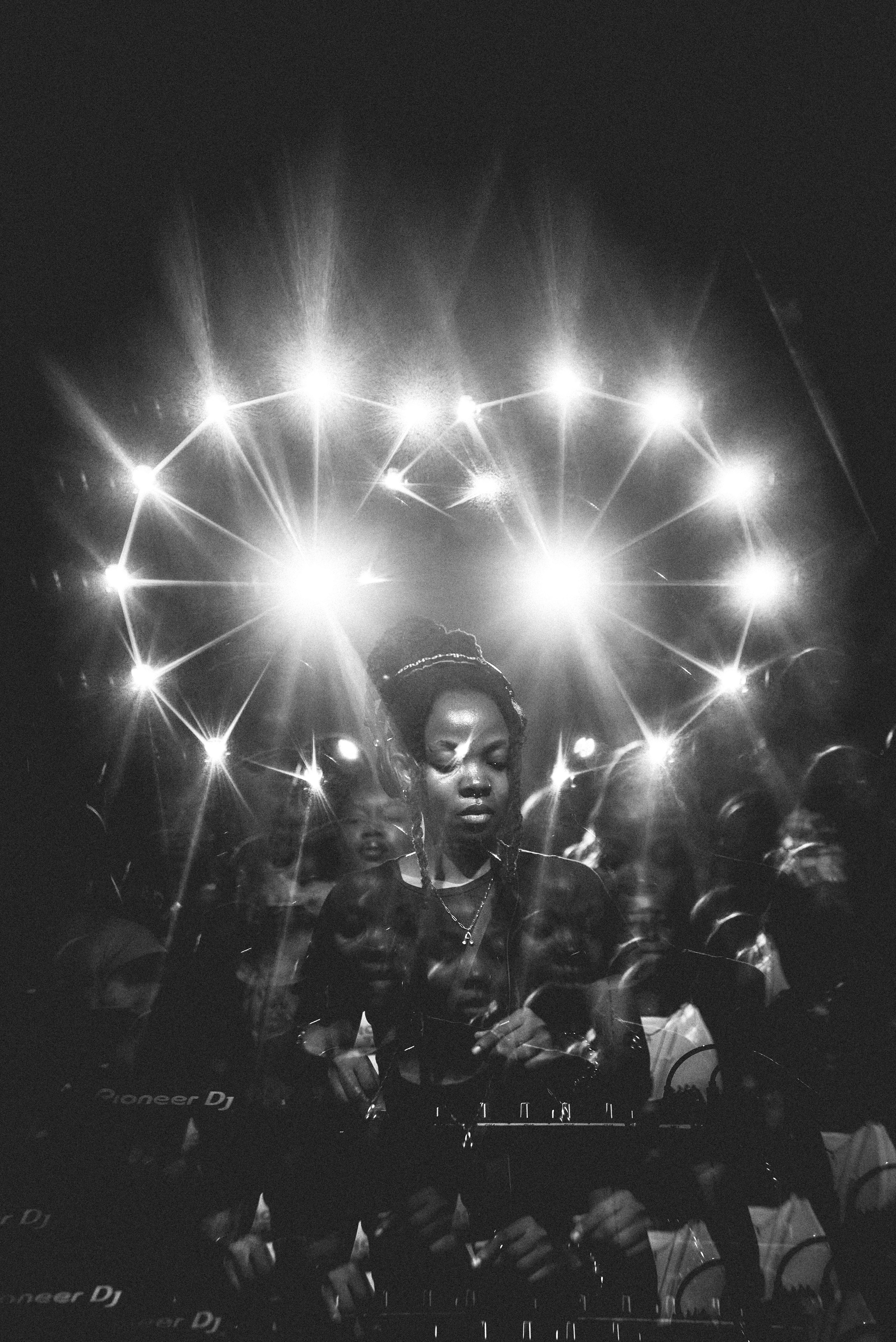
That is where Aniko comes in. A talented electronic music DJ/producer, she saw the stronger house record hiding beneath the song's existing framework and brought it fully to life, drawn in by what she describes as "some specific, soft 3-step melodies" in the original. "I just gravitated towards it," she explains.
The remix opens with a bass guitar groove that pulses through the track with a constant sense of tension and release. While the original only hinted at this element, Aniko pushes it to the forefront, making it the foundation of the production and creating momentum that rarely lets up.
According to Aniko, this bassline was central to her vision for the remix.
"I wanted to give new life to the remix and make it a dancefloor tune, and I was sure that a dark and raw bassline would do exactly that; laying the groundwork for a nice and catchy afrotech song."
Lojay's vocals remain, along with a handful of familiar instrumental details, but much of the production has been reworked to fully embrace house music.
Spotify lists the original at 118 BPM and the remix at 147 BPM, a jump that is reflected in how dramatically the song's energy shifts. The pace feels more urgent, the grooves hit harder, and what was once a hybrid of Afrobeats and dance music becomes a full-bodied electronic experience, the kind that would have you sweating in a packed warehouse long after midnight.
Driven by a steady four-on-the-floor bass drum, bass guitar, shimmering synths, and an infectious four-chord xylophone melody, the remix feels fuller and far more immersive.
The synth work expands the song's sonic landscape, filling spaces that felt comparatively restrained in the original. Notes swell in and out of the mix, adding movement between sections and making each return of the beat feel more impactful.