" transform="translate(2.266 2.266)" width="17.218780000000002px"/><path d="M 8.156 4.078 C 8.156 5.16 7.727 6.197 6.962 6.962 C 6.197 7.727 5.16 8.156 4.078 8.156 C 2.997 8.156 1.959 7.727 1.194 6.962 C 0.43 6.197 0 5.16 0 4.078 C 0 2.997 0.43 1.959 1.194 1.194 C 1.959 0.43 2.997 0 4.078 0 C 5.16 0 6.197 0.43 6.962 1.194 C 7.727 1.959 8.156 2.997 8.156 4.078 Z" fill="transparent" height="8.15622px" id="O9Ncbsd4H" stroke-dasharray="" stroke-linecap="butt" stroke-linejoin="miter" stroke-miterlimit="10" stroke-width="1.35938" stroke="rgb(31, 31, 31)" transform="translate(6.797 6.797)" width="8.15622px"/><path d="M 0.009 0 L 0 0" fill="transparent" height="1px" id="twDD_I79T" stroke-dasharray="" stroke-linecap="round" stroke-linejoin="round" stroke-width="1.8125" stroke="rgb(31, 31, 31)" transform="translate(15.857 5.891)" width="1px"/></svg>)
" transform="translate(2.719 2.719)" width="16.312450191802977px"/></svg>)
May 3, 2025 - New releases
BACK IN BUSINE$$: NAIJA HOUSE MAFIA INTERVIEW

May 3, 2025 - New releases
BACK IN BUSINE$$: NAIJA HOUSE MAFIA INTERVIEW
May 3, 2025 - Written by Ayo Grayson
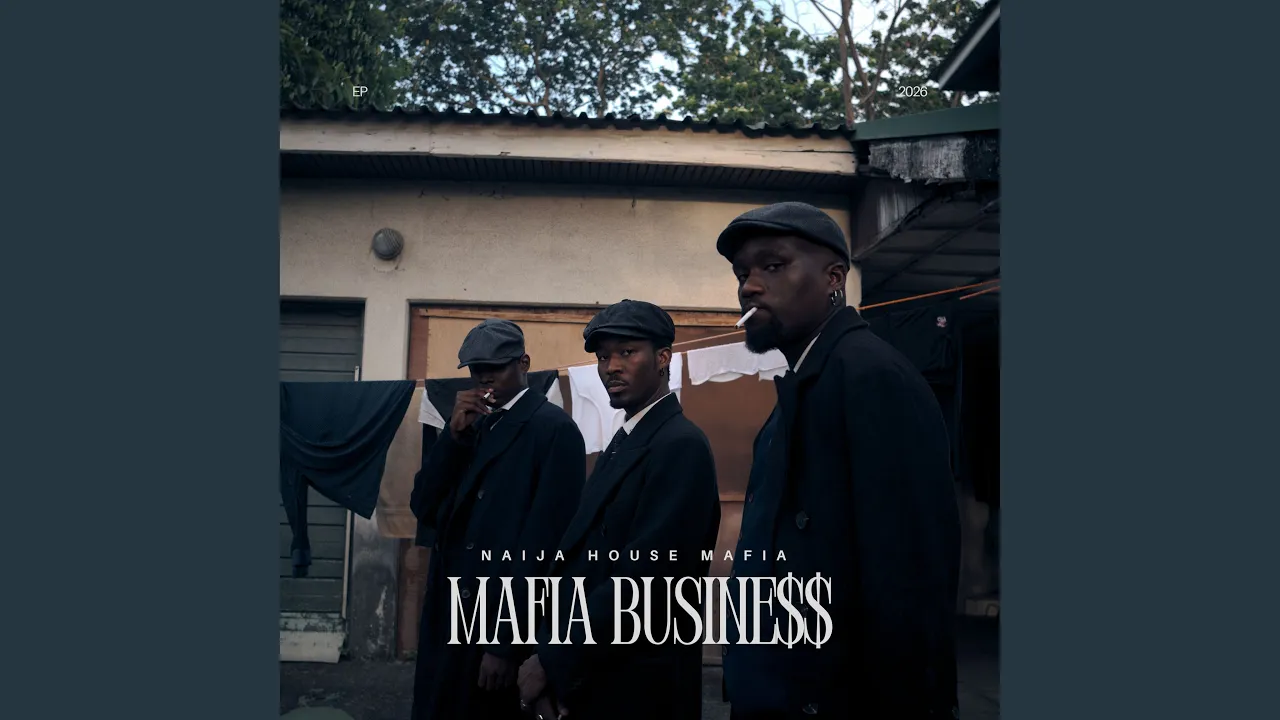
Naija House Mafia isn’t a name that appeared overnight. The trio, made up of Jamie Black, Sigag Lauren and Calix, have each spent years working as DJs and producers in their own right, building a deep understanding of what moves a dancefloor before coming together as a unit. Their first release as a collective, Fokasibe, set the tone early. A reimagining of the 2009 track by DJ Zeez, the record didn’t rely on nostalgia alone, it translated something familiar into a different environment, reshaping a known Afrobeats record into something that could live fully within electronic sets. It quickly became a fixture in clubs, not as a novelty, but as a tool.
That approach carries into Mafia Busine$$, their debut project as a trio, where the focus is on reworking Nigerian classics through Afro House and 3-Step, building records that sit between memory and movement. Across the project, the intention is clear: preserve the identity of the originals, but push them into spaces they weren’t originally designed for. In doing so, Naija House Mafia position themselves not just as DJs, but as part of a growing shift in how Nigerian music is being reinterpreted on the dancefloor.
May 3, 2025 - Written by Ayo Grayson
Naija House Mafia isn’t a name that appeared overnight. The trio, made up of Jamie Black, Sigag Lauren and Calix, have each spent years working as DJs and producers in their own right, building a deep understanding of what moves a dancefloor before coming together as a unit. Their first release as a collective, Fokasibe, set the tone early. A reimagining of the 2009 track by DJ Zeez, the record didn’t rely on nostalgia alone, it translated something familiar into a different environment, reshaping a known Afrobeats record into something that could live fully within electronic sets. It quickly became a fixture in clubs, not as a novelty, but as a tool.
That approach carries into Mafia Busine$$, their debut project as a trio, where the focus is on reworking Nigerian classics through Afro House and 3-Step, building records that sit between memory and movement. Across the project, the intention is clear: preserve the identity of the originals, but push them into spaces they weren’t originally designed for. In doing so, Naija House Mafia position themselves not just as DJs, but as part of a growing shift in how Nigerian music is being reinterpreted on the dancefloor.
Why “Naija House Mafia”? What does the name represent in the context of what you’re building together?
NHM:
It represents unity and intent. “Naija House” speaks to the sound and identity, while “Mafia” reflects how we move, that’s intentional.
Why “Naija House Mafia”? What does the name represent in the context of what you’re building together?
NHM:
It represents unity and intent. “Naija House” speaks to the sound and identity, while “Mafia” reflects how we move, that’s intentional.
At what point did this move from collaboration into a defined trio?
NHM:
It happened naturally. We started collaborating, testing ideas, and playing things out in 2023, and the response made it clear there was something bigger than individual efforts. At some point, it stopped feeling like a collaboration and started feeling like a shared vision.
At what point did this move from collaboration into a defined trio?
NHM:
It happened naturally. We started collaborating, testing ideas, and playing things out in 2023, and the response made it clear there was something bigger than individual efforts. At some point, it stopped feeling like a collaboration and started feeling like a shared vision.
Mafia Busine$$ sits at the intersection of nostalgia and rave culture. What was the original idea that sparked the project?
NHM:
The idea was simple: After the success of Fokasibe, we wanted DJs to have more weapons designed for the dancefloor. From there, it became about execution, how to preserve the identity of those songs while making them work in modern electronic spaces.
Mafia Busine$$ sits at the intersection of nostalgia and rave culture. What was the original idea that sparked the project?
NHM:
The idea was simple: After the success of Fokasibe, we wanted DJs to have more weapons designed for the dancefloor. From there, it became about execution, how to preserve the identity of those songs while making them work in modern electronic spaces.
There’s always a risk when reworking classics. For you, what was the line between respecting the original and completely reimagining it?
Jamie Black:
The line is intention. I don’t try to overwrite the original or compete with it. I focus on what made it powerful in the first place, then build around that in a way that works for a different setting, usually the dancefloor. If the identity of the record is still intact and people can still recognise its soul, then I know I’ve respected it while still giving it a new life.
There’s always a risk when reworking classics. For you, what was the line between respecting the original and completely reimagining it?
Jamie Black:
The line is intention. I don’t try to overwrite the original or compete with it. I focus on what made it powerful in the first place, then build around that in a way that works for a different setting, usually the dancefloor. If the identity of the record is still intact and people can still recognise its soul, then I know I’ve respected it while still giving it a new life.



Coming from a strong production background, what was your entry point into this project — the original records, the rhythm, or the emotion behind them?
Sigag Lauren:
We really wanted to bring that nostalgia into house music, those special records that we grew up with and that were anthems on the dancefloor. In this project, for most of the songs, I’d be doing the finishing. Some of the ideas were started by Calix and Jamie, and they send me those ideas, and I turn them into the finished product.
Coming from a strong production background, what was your entry point into this project — the original records, the rhythm, or the emotion behind them?
Sigag Lauren:
We really wanted to bring that nostalgia into house music, those special records that we grew up with and that were anthems on the dancefloor. In this project, for most of the songs, I’d be doing the finishing. Some of the ideas were started by Calix and Jamie, and they send me those ideas, and I turn them into the finished product.
Coming from a strong production background, what was your entry point into this project — the original records, the rhythm, or the emotion behind them?
Sigag Lauren:
We really wanted to bring that nostalgia into house music, those special records that we grew up with and that were anthems on the dancefloor. In this project, for most of the songs, I’d be doing the finishing. Some of the ideas were started by Calix and Jamie, and they send me those ideas, and I turn them into the finished product.
With records like Ogba, you’ve already built a strong connection with the scene this year. How did you translate that same energy into reworking familiar Nigerian songs?
Jamie Black:
I treated it like a continuation of the same feeling. With Ogba, it’s about capturing a certain local energy and attitude, and I carried that mindset into the reworks. I focused on preserving what people already love about the original songs, then reshaping them to hit harder in a club setting while still feeling familiar and rooted in Nigerian sound and culture.
With records like Ogba, you’ve already built a strong connection with the scene this year. How did you translate that same energy into reworking familiar Nigerian songs?
Jamie Black:
I treated it like a continuation of the same feeling. With Ogba, it’s about capturing a certain local energy and attitude, and I carried that mindset into the reworks. I focused on preserving what people already love about the original songs, then reshaping them to hit harder in a club setting while still feeling familiar and rooted in Nigerian sound and culture.
With records like Ogba, you’ve already built a strong connection with the scene this year. How did you translate that same energy into reworking familiar Nigerian songs?
Jamie Black:
I treated it like a continuation of the same feeling. With Ogba, it’s about capturing a certain local energy and attitude, and I carried that mindset into the reworks. I focused on preserving what people already love about the original songs, then reshaping them to hit harder in a club setting while still feeling familiar and rooted in Nigerian sound and culture.

What defines the sound of Mafia Busine$$ on a technical level — what makes it distinctly Naija House Mafia, not just edits or remixes?
Sigag Lauren:
Mafia Busine$$ is all about breaking the rules, defying the norm. Our sound is deeply Nigerian-rooted, and the best way to interpret that is through our language and melodies. The samples we use are merely a tool to pass across our message and sound.
What defines the sound of Mafia Busine$$ on a technical level — what makes it distinctly Naija House Mafia, not just edits or remixes?
Sigag Lauren:
Mafia Busine$$ is all about breaking the rules, defying the norm. Our sound is deeply Nigerian-rooted, and the best way to interpret that is through our language and melodies. The samples we use are merely a tool to pass across our message and sound.
What defines the sound of Mafia Busine$$ on a technical level — what makes it distinctly Naija House Mafia, not just edits or remixes?
Sigag Lauren:
Mafia Busine$$ is all about breaking the rules, defying the norm. Our sound is deeply Nigerian-rooted, and the best way to interpret that is through our language and melodies. The samples we use are merely a tool to pass across our message and sound.
Being part of the only trio in this space, how does that dynamic change the way you think about collaboration and authorship?
Calix:
It removes ego quickly. There’s less focus on individual ownership and more on the final outcome. The question becomes: does this work on the dancefloor, not who did what. It also means ideas get refined more. Nothing really passes through without being tested from multiple angles.
Being part of the only trio in this space, how does that dynamic change the way you think about collaboration and authorship?
Calix:
It removes ego quickly. There’s less focus on individual ownership and more on the final outcome. The question becomes: does this work on the dancefloor, not who did what. It also means ideas get refined more. Nothing really passes through without being tested from multiple angles.
Being part of the only trio in this space, how does that dynamic change the way you think about collaboration and authorship?
Calix:
It removes ego quickly. There’s less focus on individual ownership and more on the final outcome. The question becomes: does this work on the dancefloor, not who did what. It also means ideas get refined more. Nothing really passes through without being tested from multiple angles.
When these records are played out, what kind of reaction are you hoping to create — nostalgia, release, or something entirely new?
Calix:
There’s a very specific moment we’re chasing. When the crowd recognises the song and the reaction becomes something bigger than nostalgia. That mix of surprise, excitement, and release — that’s the goal.
When these records are played out, what kind of reaction are you hoping to create — nostalgia, release, or something entirely new?
Calix:
There’s a very specific moment we’re chasing. When the crowd recognises the song and the reaction becomes something bigger than nostalgia. That mix of surprise, excitement, and release — that’s the goal.
When these records are played out, what kind of reaction are you hoping to create — nostalgia, release, or something entirely new?
Calix:
There’s a very specific moment we’re chasing. When the crowd recognises the song and the reaction becomes something bigger than nostalgia. That mix of surprise, excitement, and release — that’s the goal.
Was there a specific record on the project where everything clicked — where you felt like, “this is the sound”?
NHM:
Yeah, the first time we played the records at Element House and the crowd went crazy. That’s when we knew the concept worked beyond the studio.
Was there a specific record on the project where everything clicked — where you felt like, “this is the sound”?
NHM:
Yeah, the first time we played the records at Element House and the crowd went crazy. That’s when we knew the concept worked beyond the studio.
Was there a specific record on the project where everything clicked — where you felt like, “this is the sound”?
NHM:
Yeah, the first time we played the records at Element House and the crowd went crazy. That’s when we knew the concept worked beyond the studio.
Right now, Nigerian electronic music feels like it’s organising itself. What role do you see Naija House Mafia playing in that moment?
NHM:
Right now, the scene is evolving and finding structure. We see ourselves as part of that movement, helping bridge the gap between Nigerian music history and global electronic culture, while also pushing DJ-focused music forward locally.
Right now, Nigerian electronic music feels like it’s organising itself. What role do you see Naija House Mafia playing in that moment?
NHM:
Right now, the scene is evolving and finding structure. We see ourselves as part of that movement, helping bridge the gap between Nigerian music history and global electronic culture, while also pushing DJ-focused music forward locally.
Right now, Nigerian electronic music feels like it’s organising itself. What role do you see Naija House Mafia playing in that moment?
NHM:
Right now, the scene is evolving and finding structure. We see ourselves as part of that movement, helping bridge the gap between Nigerian music history and global electronic culture, while also pushing DJ-focused music forward locally.
Faem
Faem
Faem
Faem
Faem
Faem

Black Noise Mag
Black Noise Mag

Black Noise Mag