" transform="translate(2.266 2.266)" width="17.218780000000002px"/><path d="M 8.156 4.078 C 8.156 5.16 7.727 6.197 6.962 6.962 C 6.197 7.727 5.16 8.156 4.078 8.156 C 2.997 8.156 1.959 7.727 1.194 6.962 C 0.43 6.197 0 5.16 0 4.078 C 0 2.997 0.43 1.959 1.194 1.194 C 1.959 0.43 2.997 0 4.078 0 C 5.16 0 6.197 0.43 6.962 1.194 C 7.727 1.959 8.156 2.997 8.156 4.078 Z" fill="transparent" height="8.15622px" id="O9Ncbsd4H" stroke-dasharray="" stroke-linecap="butt" stroke-linejoin="miter" stroke-miterlimit="10" stroke-width="1.35938" stroke="rgb(31, 31, 31)" transform="translate(6.797 6.797)" width="8.15622px"/><path d="M 0.009 0 L 0 0" fill="transparent" height="1px" id="twDD_I79T" stroke-dasharray="" stroke-linecap="round" stroke-linejoin="round" stroke-width="1.8125" stroke="rgb(31, 31, 31)" transform="translate(15.857 5.891)" width="1px"/></svg>)
" transform="translate(2.719 2.719)" width="16.312450191802977px"/></svg>)

Written by Chineme Chine
As Nigeria's electronic music scene continues to grow, more artists are carving out spaces beyond the country's dominant sounds and building communities around the rave scene. One of the latest to join that movement is THRPY HRSE, whose debut EP, THRPY HRSE(Collection 1), marks his first full-length introduction to that world.
Across five tracks, the project explores different corners of electronic music while remaining cohesive, moving from the hypnotic pull of Trance Dance to the abrupt finality of Marilla.
We spoke with THRPY HRSE about rediscovering his love for music through EDM, the transitioning from Afrobeat to electronic music, and why Collection 1 is only the beginning.

First of all, congratulations on your debut EP, THRPY HRSE (Collection 1). It's a very solid project.
THRPY HRSE: Thank you so much.
Before we get into the music, I want to start with you. What's the story behind your name, THRPY HRSE?
THRPY HRSE: I was expecting that question. I got it from a character in a show I really like, BoJack Horseman. The lead character has a therapist, and the therapist is a horse. For some reason, I really connected with that character.
Your name comes from a therapist character. Has electronic music played that therapeutic role in your own life?
THRPY HRSE: To be honest, EDM is one of the few genres I listen to and actually feel something. I've been doing music for a long time, and at some point it started to feel like a job. I wasn't listening for enjoyment anymore.
But with EDM, no matter how much I listen, I genuinely enjoy it and find sounds I can connect with.
How long has that relationship with EDM been there? Were there any artists or producers who shaped your love for the genre?
THRPY HRSE: I've been listening to EDM for as long as I can remember, probably since secondary school. Zedd was one of my biggest influences because you can tell he's a musician. His music is very melodic and he knows how to play with chords in a way I really connected with. I also listened to Skrillex quite a bit.
You mentioned getting burned out as a musician before finding your way into EDM. Looking back, what was that transition like, and what surprised you most about making electronic music compared to producing Afrobeats?
THRPY HRSE: It's gotten a little easier than it was in the beginning. I didn't start off as a DJ. I was fully into production before I started DJing EDM in 2024.
It was a slow transition because the soundscapes are so different, and I wanted to really understand the sound before putting anything out. Even this EP is just an introduction. I'm still trying to find my sound, my own small corner where I can do my own thing.
One of the biggest things I realized though, was that I didn't know as much about production as I thought I did. Afrobeats doesn't require a lot to get people dancing. As long as the groove is right and the kick hits hard, you've got a solid track. It's very minimalistic. Electronic music taught me so much more. If I made an Afrobeats song now, it would be better than anything I made before simply because of what I've learned from EDM.
After spending so much time learning the sound, what made you feel ready to finally put your own music out?
THRPY HRSE: Honestly, it was an impulsive decision. About a month ago, I just decided that's what I wanted to do, and I started.
What did ‘starting’ actually look like? Were some of the songs already there?
THRPY HRSE: I already had three of the songs before I decided to do an EP, and I built the concept around those three tracks.
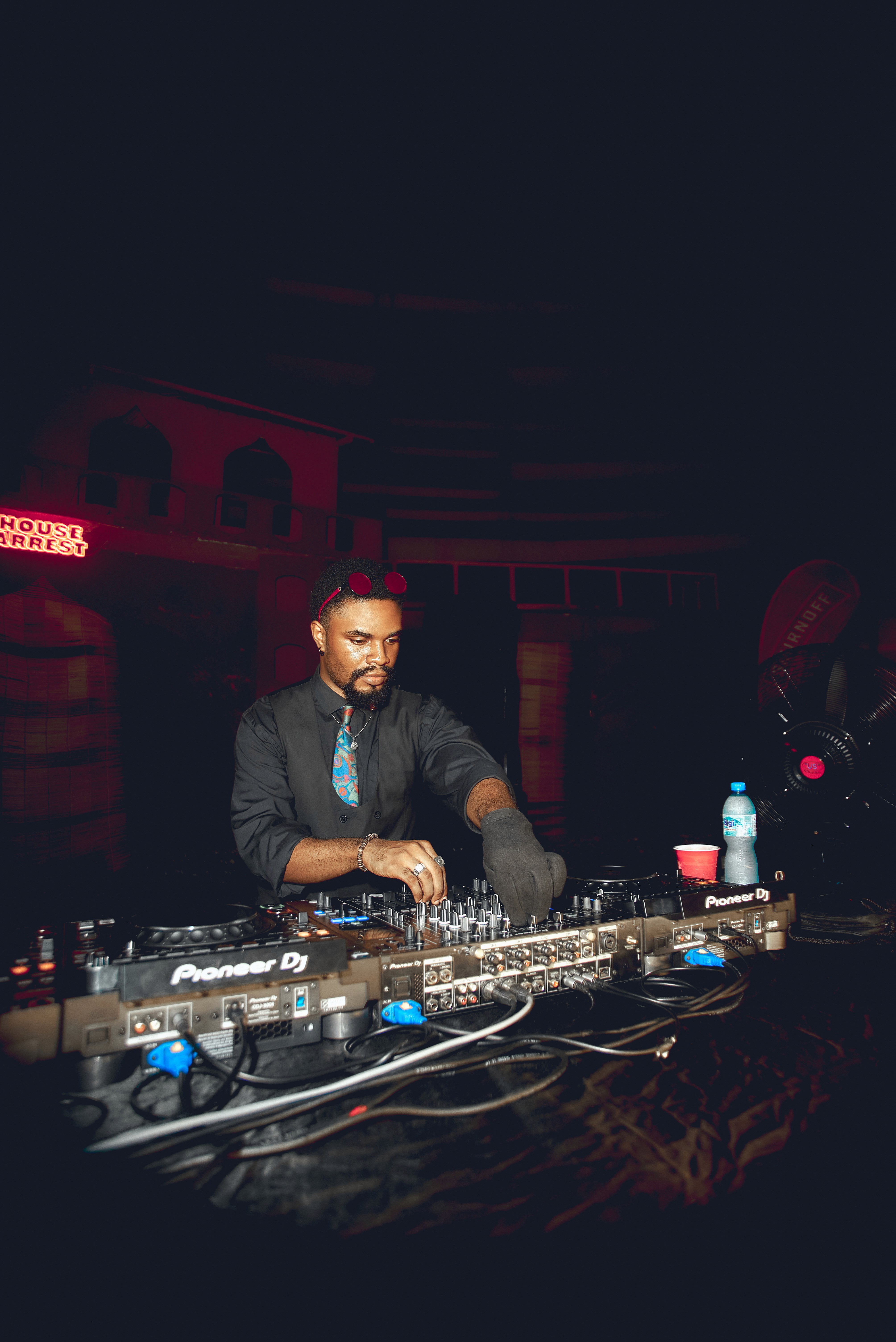
Once those three songs were in place, how quickly did the rest of the project come together?
THRPY HRSE: Equine Therapy only took me about a week from production to mixing and mastering.
Which track changed the most while you were shaping the project?
THRPY HRSE: Enter, the first song I made, gave me real issues. I think I have at least ten versions of it. I kept changing things. I'd play it out and think, "this needs to change," or, "that needs to change." That's why it means a lot that people enjoy that song now.
The opening track, Trance Dance, has this disorienting melody; it feels almost unfamiliar at first, but by the end you're hooked. What's the story behind it?
THRPY HRSE: That track was me flexing my musicianship.
The percussion isn't the usual 1-2-3-4, 1-2-3-4. I added a bounce, and that became the centerpiece of the song. I built everything around it, with the intention of slowly, progressively putting the listener into a trance; hence the name.
It was a fun song to make, to be honest.
Every track feels distinct, but the EP still holds together as a whole. Trance Dance has that disorienting quality, Marilla leans into Mara, Ewo has its syncopated drums, yet it's all cohesive. How did you pull that off?
THRPY HRSE: I've been making music for a long time, so I leaned on that experience to arrange it. Curating a project that flows is one of my strengths.