" transform="translate(2.266 2.266)" width="17.218780000000002px"/><path d="M 8.156 4.078 C 8.156 5.16 7.727 6.197 6.962 6.962 C 6.197 7.727 5.16 8.156 4.078 8.156 C 2.997 8.156 1.959 7.727 1.194 6.962 C 0.43 6.197 0 5.16 0 4.078 C 0 2.997 0.43 1.959 1.194 1.194 C 1.959 0.43 2.997 0 4.078 0 C 5.16 0 6.197 0.43 6.962 1.194 C 7.727 1.959 8.156 2.997 8.156 4.078 Z" fill="transparent" height="8.15622px" id="O9Ncbsd4H" stroke-dasharray="" stroke-linecap="butt" stroke-linejoin="miter" stroke-miterlimit="10" stroke-width="1.35938" stroke="rgb(31, 31, 31)" transform="translate(6.797 6.797)" width="8.15622px"/><path d="M 0.009 0 L 0 0" fill="transparent" height="1px" id="twDD_I79T" stroke-dasharray="" stroke-linecap="round" stroke-linejoin="round" stroke-width="1.8125" stroke="rgb(31, 31, 31)" transform="translate(15.857 5.891)" width="1px"/></svg>)
" transform="translate(2.719 2.719)" width="16.312450191802977px"/></svg>)

Written by Chineme Chine
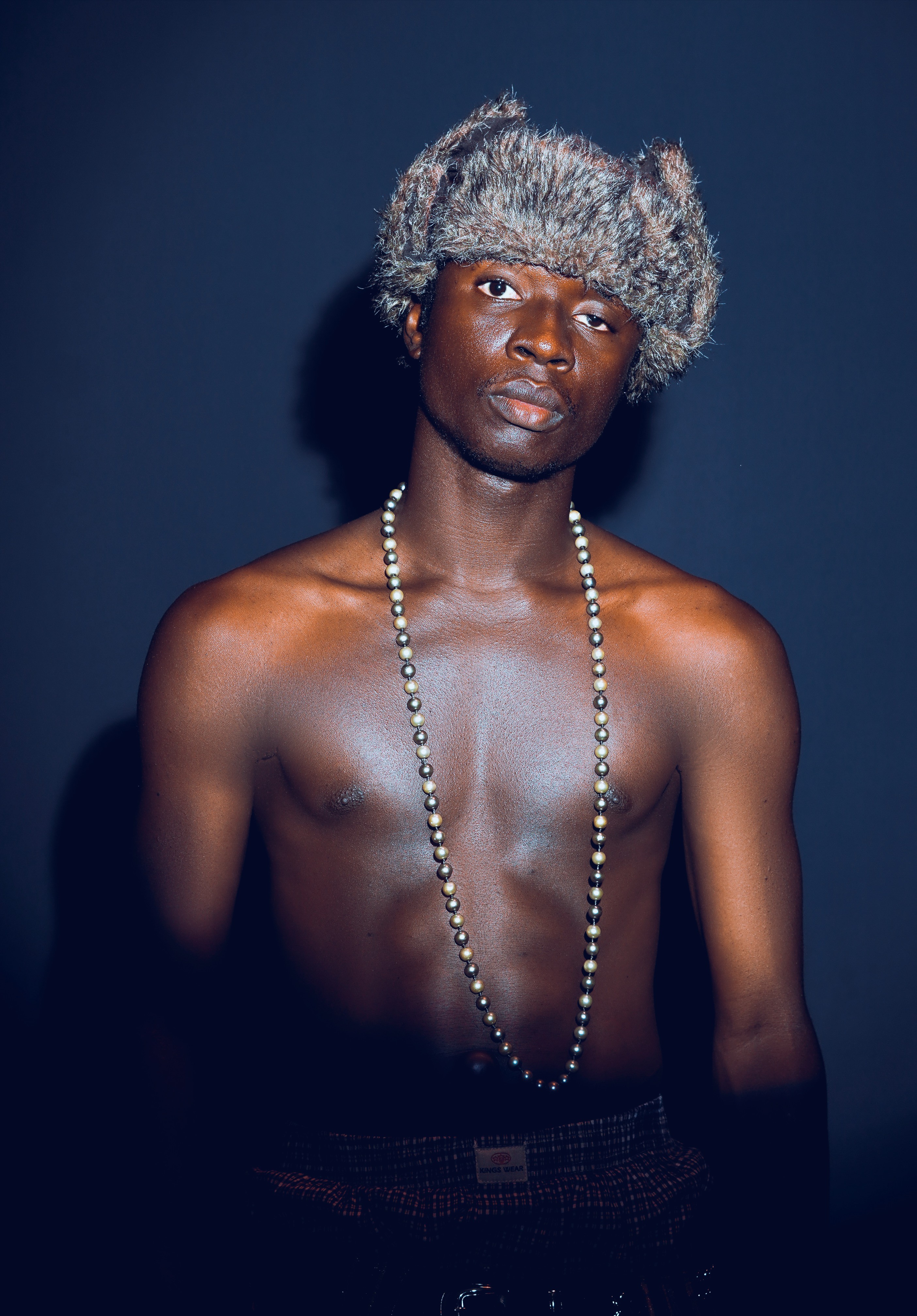
Somewhere between midnight and dawn, people have been pressing play on Tsammani and sending Firstklaz messages they never expected to write. Some say it helped them breathe again. Others say it made them cry. Most of them say the same thing in different ways: they found it at the exact moment they needed it.
For a song that pulled in hundreds of thousands of Spotify streams in its first week, those 3AM messages might be the most meaningful measure of its impact.
But Firstklaz did not set out to make a moment. He set out to document a feeling—the frustration of chasing dreams that always seem slightly out of reach, and the effort it takes to keep going anyway.
What came back was something bigger than he expected: proof that emotion can travel where language cannot.
Firstklaz has built a reputation for refusing to be boxed in, moving fluidly across sounds and influences, and Tsammani is no different. Stepping into Afro-house territory, he remains rooted in something deeply personal: a prayer, a story, and an invitation to hold on.
But Firstklaz did not set out to make a moment. He set out to document a feeling—the frustration of chasing dreams that always seem slightly out of reach, and the effort it takes to keep going anyway.
What came back was something bigger than he expected: proof that emotion can travel where language cannot.
Firstklaz has built a reputation for refusing to be boxed in, moving fluidly across sounds and influences, and Tsammani is no different. Stepping into Afro-house territory, he remains rooted in something deeply personal: a prayer, a story, and an invitation to hold on.
Built in collaboration with producer JAZZWRLD, Tsammani sits within Afro-house but never fully settles into it. It unfolds gradually, introducing its elements one layer at a time.
It opens with restrained percussion before a faint melodic line slips in, gradually building the world of the track.The vocal refrain arrives only once that foundation is established, giving it the weight of something uncovered rather than introduced.
Across English, Pidgin and Hausa, Firstklaz sings about self-doubt, faith and perseverance. The title itself, Tsammani, meaning “expectations”, frames the tension: what you hope for versus what actually arrives, and the patience required to sit in between.
JAZZWRLD's production adds another layer of emotion to the record without abandoning its Afro-house foundations. Built around the rolling pulse of three-step, Tsammani carries the genre's characteristic forward momentum while making room for something more introspective.
There is a quiet melancholy woven into the song's DNA, yet it remains undeniably danceable. Balancing solemnity and movement is no easy feat, but Tsammani manages both, occupying a space that feels deeply reflective while still inviting listeners to move.
Together, the production, the recurring refrain, and Firstklaz's vocals and ad-libs communicate the song's message even without a full understanding of the lyrics. In many ways, Tsammani serves as a reminder that music can transcend language, carrying emotion across cultural and linguistic boundaries.

One of the song’s most striking details appears at its beginning and end: the voice of an air hostess guiding passengers through takeoff and landing. It is a subtle touch, but one that frames Tsammani as a journey in itself, moving through uncertainty and pain before arriving at acceptance, hope, and healing.
That subtle detail is part of what gives the song its emotional pull. With that in mind, we sat down with Firstklaz to talk about the song, its unexpected impact on listeners, working with JAZZWRLD, and what comes next.
One of the first things that pulls you into this track is the repeated Hausa refrain, "Da muwana za ta kare." What does it mean, and what is the message behind it?
"Da muwana za ta kare" means "my pain will go away".
In the song, I'm trying to talk about everything I've been facing lately. It's me asking God for guidance, strength and patience. Because it feels like the closer I get to my dreams, the further away they slip. So I'm using my story to inspire people who are facing the same experience at the moment.
The title of the track, ‘Tsammani’, loosely translates to ‘Expectations’. Beyond the music itself, what do you expect the song to mean to people who connect with it?
I just want them to feel hope when they listen to the song. I want everybody to feel like their problems are coming to an end.
You have collaborated with many artists and producers over the years. How was working with JAZZWRLD different, and what did that bring to the final sound of the record?
Working with JAZZWRLD made me realise that music is far more spiritual than most people think. He also never compromises on his sound. That's one thing I respect about him, and from him I've learned never to compromise my art.
Music often takes a life of its own once it reaches its listeners. Have there been any reactions from fans that surprised you or changed the way you saw the song?
When we were recording the first verse, everyone in the studio was dancing. And I was standing there, literally pouring out pain. That contrast is actually what inspired the second verse. In Hausa, I'm telling them, "you guys are dancing to my pain." So I assumed it would just be received as a feel-good song.
Then the 3AM messages started coming in. People telling me that they cried when they listened to the song. Messages saying, "Yo, this song saved my life." Honestly, that caught me off guard because I never wrote Tsammani for anyone else. I wrote it for me.
Waking up to those messages showed me that my truth was someone else's, too.

How has it been creating music that includes Hausa? It is not a language many mainstream artists incorporate into their music.
It's been crazy because most times, especially here in Nigeria, people don't really pay attention to artists from the North. So singing in Hausa was difficult at first, especially when people didn't fully understand what I was trying to do. But over time, they began to understand.
I don't think people really need to understand the language, though. The melodies and the emotions they carry take the music much further than language ever could.
You've released four songs already this year. Is this building toward something bigger?
I'm working on my project at the moment. I'm focused on releasing larger bodies of work so people can better understand where I'm going creatively, rather than just putting out singles. I feel like a full body of work will help people understand me better.
Whether listeners arrive at Tsammani through its infectious Afro-house rhythms or the vulnerability woven into its lyrics, the song’s impact is unmistakable. What began as a personal prayer has become something far more shared: music that holds private pain in public spaces and turns it into comfort for strangers.