" transform="translate(2.266 2.266)" width="17.218780000000002px"/><path d="M 8.156 4.078 C 8.156 5.16 7.727 6.197 6.962 6.962 C 6.197 7.727 5.16 8.156 4.078 8.156 C 2.997 8.156 1.959 7.727 1.194 6.962 C 0.43 6.197 0 5.16 0 4.078 C 0 2.997 0.43 1.959 1.194 1.194 C 1.959 0.43 2.997 0 4.078 0 C 5.16 0 6.197 0.43 6.962 1.194 C 7.727 1.959 8.156 2.997 8.156 4.078 Z" fill="transparent" height="8.15622px" id="O9Ncbsd4H" stroke-dasharray="" stroke-linecap="butt" stroke-linejoin="miter" stroke-miterlimit="10" stroke-width="1.35938" stroke="rgb(31, 31, 31)" transform="translate(6.797 6.797)" width="8.15622px"/><path d="M 0.009 0 L 0 0" fill="transparent" height="1px" id="twDD_I79T" stroke-dasharray="" stroke-linecap="round" stroke-linejoin="round" stroke-width="1.8125" stroke="rgb(31, 31, 31)" transform="translate(15.857 5.891)" width="1px"/></svg>)
" transform="translate(2.719 2.719)" width="16.312450191802977px"/></svg>)

Written by Olawale Toriola
There is perhaps a version of Tobi Peter’s story where music is the beginning and everything else comes after. But listening to him talk about his journey, it becomes difficult to separate the producer from the animator, the DJ from the computer scientist, or the content creator from the person who has spent years documenting the very scene he hopes to contribute to. For Tobi, all of these have always existed together.
“I’ve always been interested in computers,” he says. “I liked animation, I liked drawing, I liked music. I think I’ve always just been looking for different ways to express myself.”
It is a sentence that, in retrospect, explains quite a lot. Long before Tobi began thinking seriously about production or DJing, there was already a fascination with the possibilities of technology. His home computer at the time was not simply a tool, it was a doorway into different worlds and animation became one of those worlds while music became another. His entry into music production came around 2016, at a time when he was still figuring out what exactly he wanted his creative life to look like. He would eventually study Computer Science at Babcock University, but even that decision did not mean abandoning the creative instincts that had followed him from childhood. If anything, it gave him another language with which to understand them.
“I’ve always been that person that wants to create something,” he explains. “It doesn’t really matter what the medium is. If I see something and I feel like I can make it, I want to try.”
That curiosity would become one of the defining characteristics of his career. At one point, Tobi estimates that he had created more than 700 remixes. It is the kind of number that sounds excessive until you understand that repetition, for him, has always been part of the learning process. The same instinct that pushed him to experiment with animation pushed him to keep opening a new project file, finding another song, trying another sound. At some point, Tobi found himself making visuals for other artists, using one creative discipline to feed another.
And perhaps this is where his story becomes more interesting.
Because while many creatives spend years trying to find the one thing they are supposed to be known for, Tobi seems more interested in understanding how all his interests can exist under one roof.
“I don’t really see them as separate things,” he says. “For me, it’s all just creativity. It’s just different ways of telling a story.”
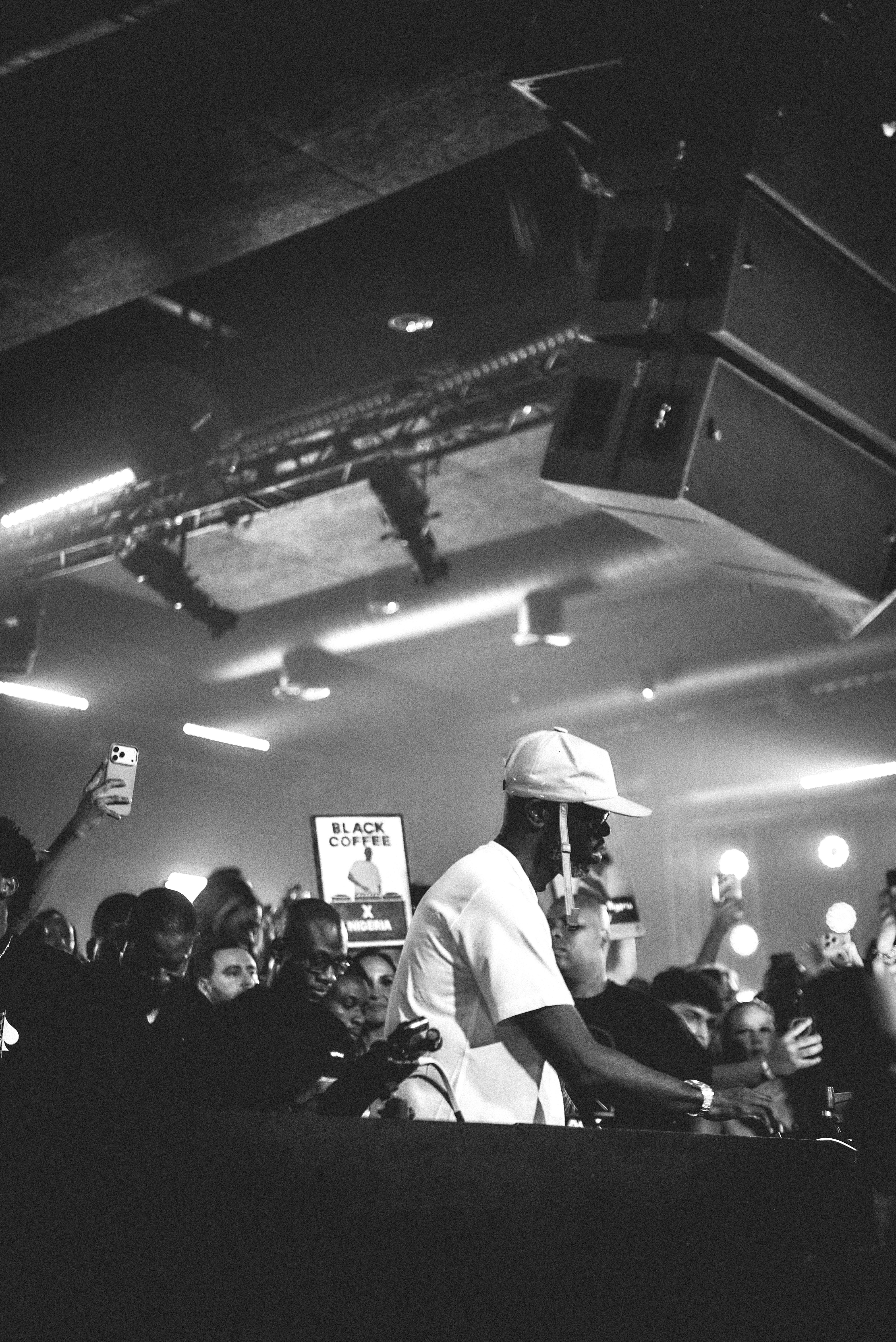
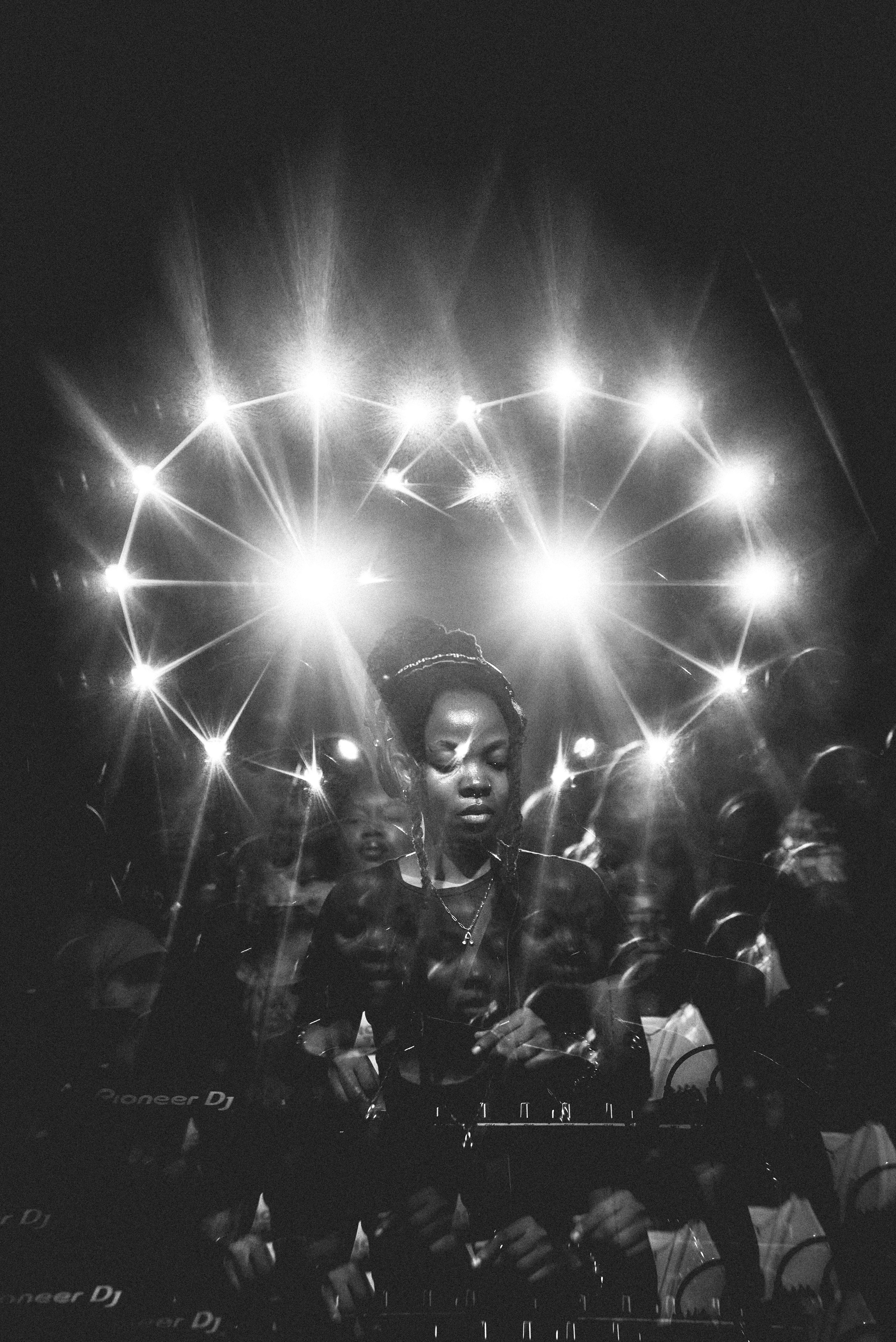
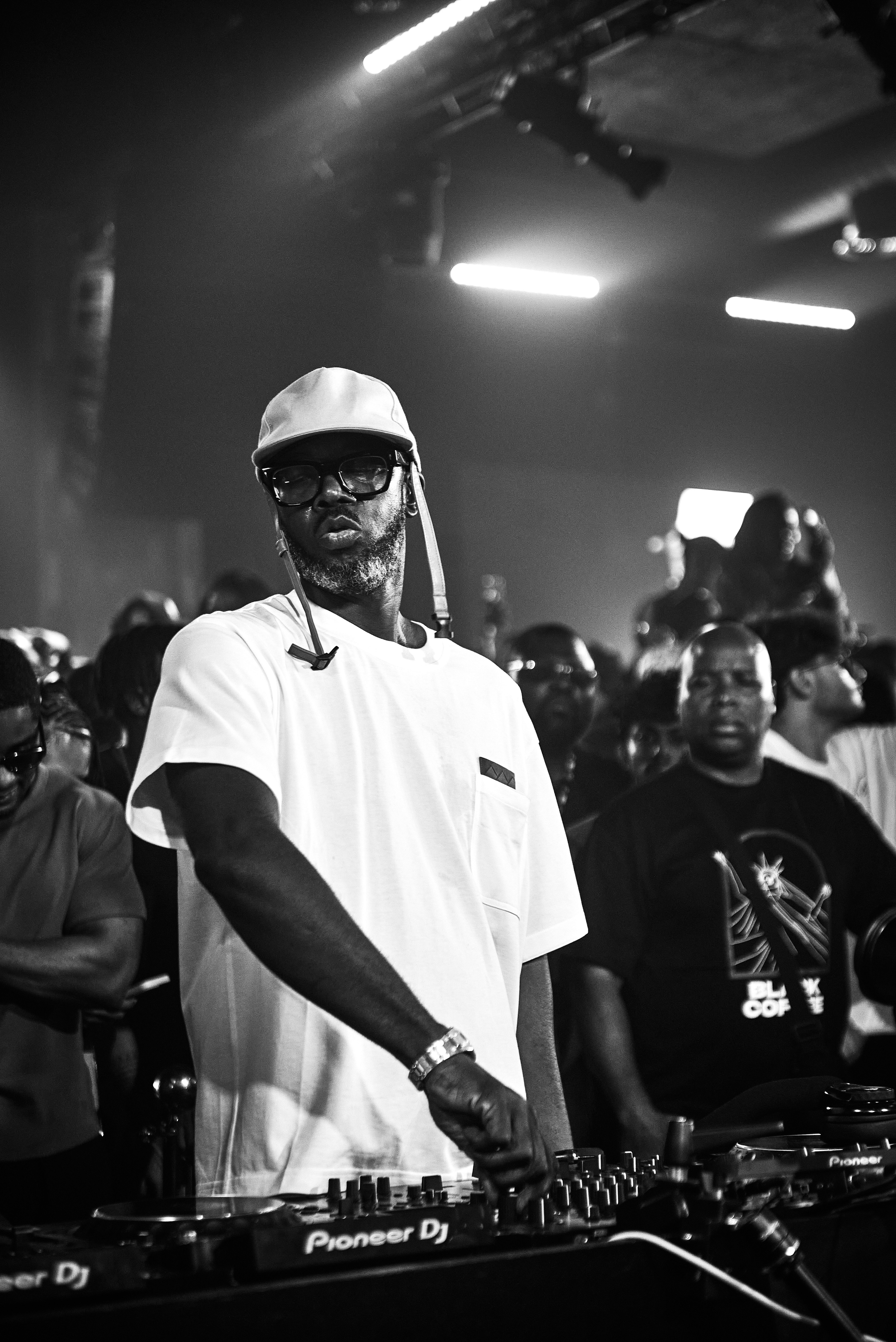
That philosophy has followed him into the art of DJing. The transition was not necessarily a clean break from the visual world. Instead, it felt like another extension of the same curiosity. If animation allowed him to control what people saw, being a DJ gave him the opportunity to influence what people felt in real time. There is something about a DJ set that cannot be recreated in a studio. The room talks back. The crowd becomes part of the music. A transition that works perfectly in headphones can fall flat on a dance floor, while a record you were unsure about can suddenly transform the room. Tobi became interested in that conversation.
“I like the idea that you’re not just playing songs,” he says. “You’re creating an experience. You’re watching people, you’re seeing how they’re reacting, and you’re deciding what happens next.”


Rather than simply attending shows, Tobi began keeping track of them. According to his own records, he has documented hundreds of performances, including more than 290 shows, with 41 already recorded in the current year at the time of our conversation. It sounds like the work of someone who is obsessed with numbers , but the numbers are really about something else. They are evidence.
Evidence of where people are gathering. Evidence of which sounds are moving through a city. Evidence of what audiences respond to. Evidence of a culture that is often experienced intensely but documented inconsistently. And that same analytical instinct appears in the way he approaches content. Tobi pays attention to analytics. He watches retention. He thinks about the first few seconds of a video and what might make someone stay.
“I’ve realised that sometimes the idea is not even the problem,” he says. “It’s how you present it. You can have something really good, but if you don’t get someone’s attention, they might never get to the good part.”
It is a lesson that seems to sit comfortably between his different worlds: music, technology, animation and content. But there is another side to Tobi’s thinking that becomes more apparent when he starts talking about the kind of music he wants to make. His influences for instance, are undeniably connected to the evolution of South African house music and Amapiano, sounds that have travelled across borders and reshaped dance floors around the world. But admiration, for him, does not mean imitation. He is interested in the question of what happens when those electronic frameworks begin speaking in a distinctly Nigerian language.
“I don’t want to just make something that sounds South African because I like South African music,” he says. “I want to take what I like and figure out how it can sound like me.”


That “me” is important.
Because for Tobi, Nigerian identity does not necessarily have to mean abandoning electronic music for something more recognisable. It could exist in the percussion, the vocals, the rhythm, the use of talking drums, the textures and sounds that are already embedded in the country’s musical history. He talks about traditional Nigerian music and masquerade sounds with the same enthusiasm with which he talks about contemporary electronic production. There is a reason for that.
“I’ve always felt like there’s so much in our traditional music that we haven’t even explored properly,” he says. “Sometimes you hear those drums and rhythms and you realise you can build something completely different around them.”
This is perhaps where Tobi’s interest in technology and culture meet most clearly. He does not seem interested in simply reproducing what already exists. He wants to take things apart, understand how they work, and then rebuild them. Even his approach to production begins from this place. Rather than beginning with a melody simply because it sounds beautiful, he is often drawn first to the rhythmic architecture of a record. Once the foundation is right, everything else can begin to grow around it. But there is a challenge that comes with trying to introduce people to sounds they do not immediately recognise. Audiences, especially in a nightlife culture built around familiarity, often want the song they already know. They want the hook they can sing. They want the moment they have seen online. He also understands that pushing a sound forward requires someone to take the risk of playing something unfamiliar first.
“You can’t expect people to love something they’ve never heard before,” he says. “Sometimes they have to hear it a few times. They have to experience it.”
It is a tension that exists throughout his own ambitions.
On one hand, he wants to make music that people can dance to immediately. On the other, he wants to contribute to something larger than a single release. He wants a catalogue and an ecosystem. He wants the songs to exist alongside the visuals, the performances, the documentation and the community around them.
And eventually, he wants the performances themselves to become something bigger.
When Tobi talks about the future, he does not describe a DJ standing behind a deck for two hours while people dance in front of him. He imagines dancers. Choreography. Visuals. Nigerian cultural references. A performance where the music is only one part of the experience.
“I want people to come and watch a Tobi Peter performance and know that they’re going to see something,” he says. “Not just hear something.”
That ambition extends beyond Nigeria. There are the obvious stages like Coachella, Tomorrowland, the international festivals that have become shorthand for global recognition. But beneath the ambition to perform on those stages is something more personal. He wants Nigerian dance music to have more of its own catalogue. More records. More producers. More artists experimenting, and more sounds that can travel without having to first become something else.
And perhaps that is why Tobi’s different identities do not feel as disconnected as they initially appear. All of them are ultimately trying to do the same thing: understand how people experience something, and then create something worth experiencing again.
“I think about what I want people to remember,” he says. “I don’t just want to make things and move on. I want to leave something behind.”