Jan 24, 2025 - New releases

SHOULD WATER BE FREE AT RAVES

A conversation about water unexpectedly ignited one of the more revealing debates in Nigeria’s electronic music scene.

Jan 24, 2025 - New releases

SHOULD WATER BE FREE AT RAVES

A conversation about water unexpectedly ignited one of the more revealing debates in Nigeria’s electronic music scene.

Jan 24, 2025 - New releases

SHOULD WATER BE FREE AT RAVES

A conversation about water unexpectedly ignited one of the more revealing debates in Nigeria’s electronic music scene.

Jan 24, 2025 - New releases

SHOULD WATER BE FREE AT RAVES

A conversation about water unexpectedly ignited one of the more revealing debates in Nigeria’s electronic music scene.

Jan 24, 2025 - Written by Israel Ajayi

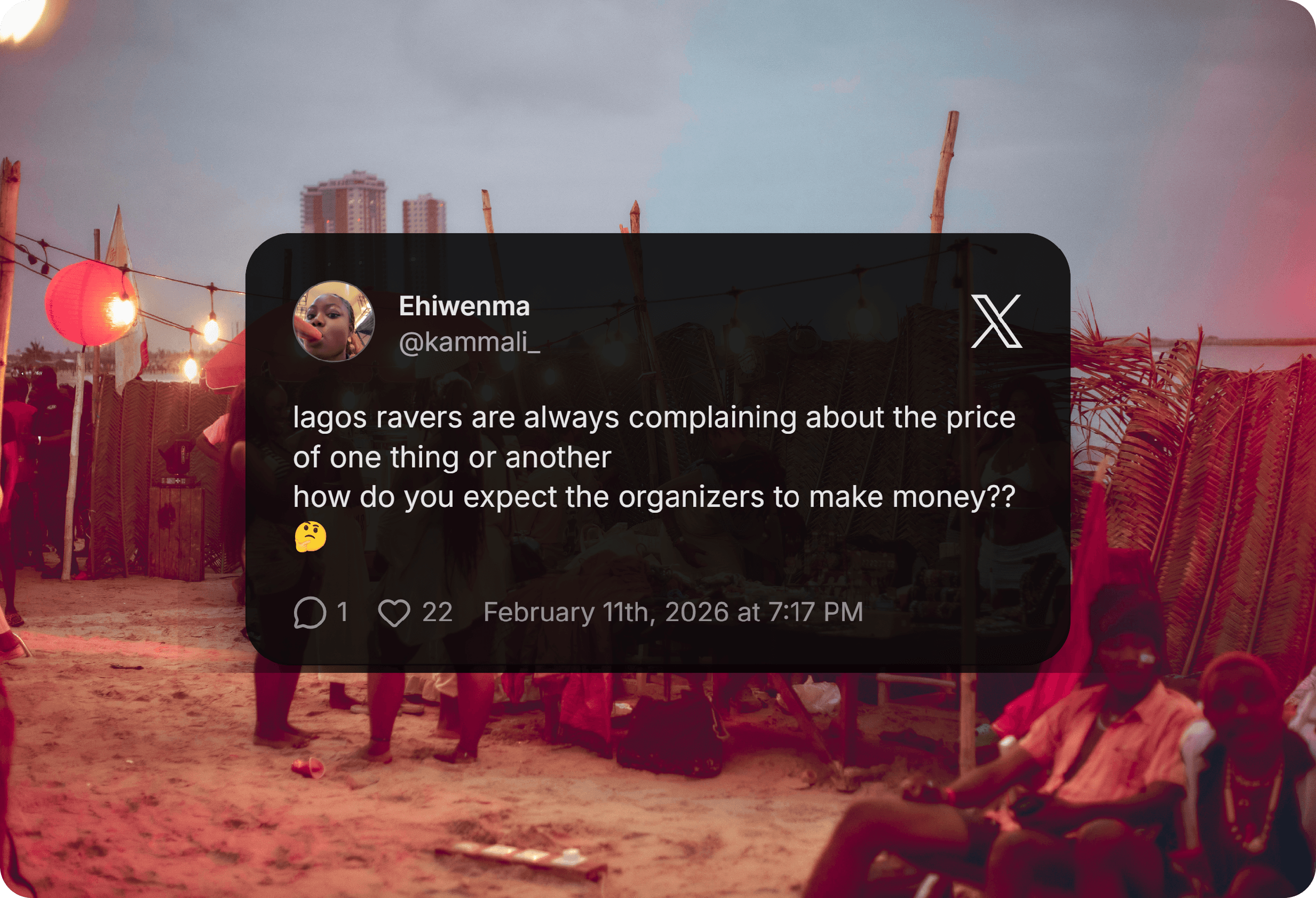
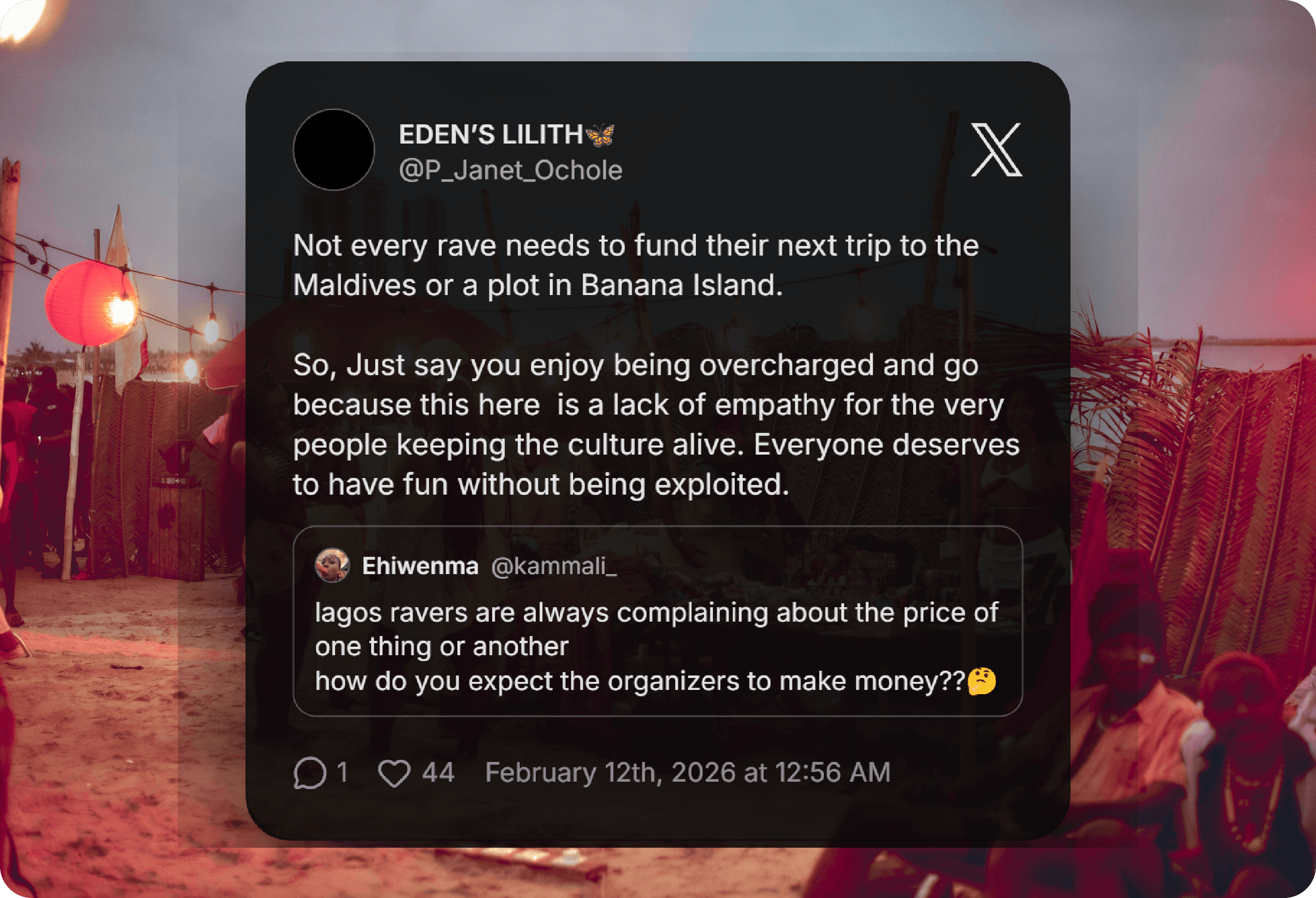
The spark was simple: a tweet criticizing rave organizers for restricting guests from bringing their own water into events. What followed was a wave of reactions online. Some people argued that water should always be freely accessible at raves, citing safety and basic care for attendees spending hours dancing in crowded spaces. Others pushed back, pointing out the economic realities of running underground events in Nigeria.


The debate quickly evolved beyond hydration. It exposed the fragile economics behind the rave scene itself.


Nightlife, particularly underground electronic events, runs heavily on community energy, but it also runs on extremely tight margins. Unlike large commercial festivals or corporate-backed concerts, many raves are independently organized by small teams operating without significant sponsorship or institutional support. Ticket prices are often carefully calculated simply to break even.

Jan 24, 2025 - Written by Israel Ajayi

The spark was simple: a tweet criticizing rave organizers for restricting guests from bringing their own water into events. What followed was a wave of reactions online. Some people argued that water should always be freely accessible at raves, citing safety and basic care for attendees spending hours dancing in crowded spaces. Others pushed back, pointing out the economic realities of running underground events in Nigeria.


The debate quickly evolved beyond hydration. It exposed the fragile economics behind the rave scene itself.


Nightlife, particularly underground electronic events, runs heavily on community energy, but it also runs on extremely tight margins. Unlike large commercial festivals or corporate-backed concerts, many raves are independently organized by small teams operating without significant sponsorship or institutional support. Ticket prices are often carefully calculated simply to break even.

From an organizer’s perspective, almost every element of a rave carries a cost.


Venues in Lagos and other major cities are increasingly expensive, particularly spaces capable of accommodating sound systems, lighting rigs, and large crowds. On top of that come production costs: stage builds, lighting design, sound engineering, security, logistics, and staffing. For bigger events, booking DJs — especially international acts — adds another layer of financial pressure. International bookings can cost thousands of dollars once fees, travel, and hospitality are accounted for.


Even local DJs, as the scene grows, are increasingly commanding professional fees as their work transitions from hobby to career.


As one anonymous rave organizer explained when asked about the water debate:


“From the organizer’s point of view, they’re trying to survive. The price points are projected to try to break even considering the cost of the venue and others.”


The economics are rarely as generous as audiences might assume. Many events barely break even, and some operate at a loss. The organizers who persist often do so because of passion for the culture rather than financial reward.


“Note that I’m not even talking about profit,” the organizer continued. “Because there’s a high chance there’s no profit being made.”
From an organizer’s perspective, almost every element of a rave carries a cost.


Venues in Lagos and other major cities are increasingly expensive, particularly spaces capable of accommodating sound systems, lighting rigs, and large crowds. On top of that come production costs: stage builds, lighting design, sound engineering, security, logistics, and staffing. For bigger events, booking DJs — especially international acts — adds another layer of financial pressure. International bookings can cost thousands of dollars once fees, travel, and hospitality are accounted for.


Even local DJs, as the scene grows, are increasingly commanding professional fees as their work transitions from hobby to career.


As one anonymous rave organizer explained when asked about the water debate:


“From the organizer’s point of view, they’re trying to survive. The price points are projected to try to break even considering the cost of the venue and others.”


The economics are rarely as generous as audiences might assume. Many events barely break even, and some operate at a loss. The organizers who persist often do so because of passion for the culture rather than financial reward.


“Note that I’m not even talking about profit,” the organizer continued. “Because there’s a high chance there’s no profit being made.”

That reality complicates what might otherwise appear to be a simple question about access and fairness.


At the same time, concerns about water access aren’t trivial. Raves are physically demanding environments: crowded dance floors, long hours of movement, and high temperatures. In many established rave cultures globally, access to water is considered a basic safety measure.


The tension, then, sits at the intersection of two truths.


On one hand, access to hydration is a legitimate safety concern. On the other, organizers are trying to sustain events within an ecosystem where every revenue stream helps keep the party alive.


Until a more sustainable model emerges, many people within the community believe the solution lies somewhere in the middle.


“Until there’s a fail-proof model to the water situation, it’s important that we look out for each other as a community,” the organizer said. “On the dance floor, share. Buy for someone if you can afford to.”


That sense of collective responsibility has always been part of rave culture globally. Raves were built not just as parties but as spaces of shared care, environments where strangers look out for one another while immersed in music and movement.


For now, Nigeria’s electronic scene is still figuring out how to balance those values with the realities of survival.


What remains clear is that the rave ecosystem is still young, still evolving, and still largely driven by people who care deeply about the culture they are building.


And despite the debates, the goal remains the same:


To keep the party going.

That reality complicates what might otherwise appear to be a simple question about access and fairness.


At the same time, concerns about water access aren’t trivial. Raves are physically demanding environments: crowded dance floors, long hours of movement, and high temperatures. In many established rave cultures globally, access to water is considered a basic safety measure.


The tension, then, sits at the intersection of two truths.


On one hand, access to hydration is a legitimate safety concern. On the other, organizers are trying to sustain events within an ecosystem where every revenue stream helps keep the party alive.


Until a more sustainable model emerges, many people within the community believe the solution lies somewhere in the middle.


“Until there’s a fail-proof model to the water situation, it’s important that we look out for each other as a community,” the organizer said. “On the dance floor, share. Buy for someone if you can afford to.”


That sense of collective responsibility has always been part of rave culture globally. Raves were built not just as parties but as spaces of shared care, environments where strangers look out for one another while immersed in music and movement.


For now, Nigeria’s electronic scene is still figuring out how to balance those values with the realities of survival.


What remains clear is that the rave ecosystem is still young, still evolving, and still largely driven by people who care deeply about the culture they are building.


And despite the debates, the goal remains the same:


To keep the party going.

Black Noise Mag

Black Noise Mag

Black Noise Mag